Lasting Remembrance is in the process of being updated. Please be aware that some links may be outdated or broken.
Compiling the Database: Doing Research on the Newfoundland Mi’Kmaq in World War I
| |
By Maura Hanrahan
Find a pdf version of the database here.
This database lists 157 Newfoundland Mi’kmaq who enlisted in World War I. Soldiers’ service files from the Newfoundland Regiment were the main source of data for this project. These service files are quite comprehensive, and cover many details of the soldier’s service during the war. This information includes prior occupation, residence, and duration of service, battles fought, health problems, wounds, injuries, deaths, disciplinary records, pension information, and very limited personal correspondence. They do not, however, identify soldiers as Mi’kmaq. Some of these files are online at The Rooms Provincial Archives (PANL): see https://www.therooms.ca/thegreatwar/in-depth/military-service-files/database
Service files give an overview of a soldier’s career and some very limited information about their readjustment to post war life. In the case of Newfoundland Mi’kmaq, one recurring issue was spelling; surnames such as Chaisson and Benoit were spelled multiple ways. This database lists surnames in what I believe to be their current spelling and includes alternative spellings used in some sources, such as regiment attestations, in brackets. This is also the case with first names, such as Yves. In some cases, home communities were not listed, which required additional research. I have used the current names for communities to make the database as user-friendly as possible. “NR” on the database indicates that the information was not recorded.
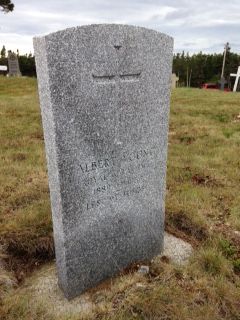 | 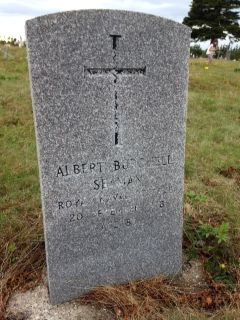 | 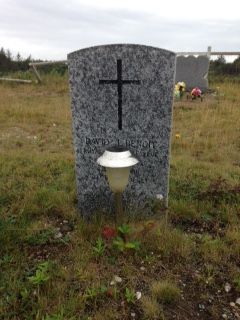 |
| Gravesites for Albert Young, Albert Burchell and David Benoit. Photographs taken by M. Hanrahan in 2015. | ||
Other sources of information include: the Commonwealth War Graves Commission (CWGG)1 , the Newfoundland Regiment’s Online History2 , and the Wreck Site, an online ship wreck database3. The CWGC website provides information on grave locations for soldiers who were killed in action while the Wreck Site offered additional information about sailors who were lost at sea. I also used my knowledge of Newfoundland Mi’kmaq communities, families and history in the project. In some cases, visits were made to cemeteries in Western Newfoundland to check details and take photos. Some data were cross-referenced with Bill O’Gorman’s book Lest We Forget: The Life and Times of Veterans from the Port Au Port Peninsula4 and with Melvin and Karen White’s book We Remember You Now; Honoring the Soldiers of WWI Bay St. George South5. These books represent a great deal of work and dedication on behalf of the authors and provide information not contained in the soldier’s service files.
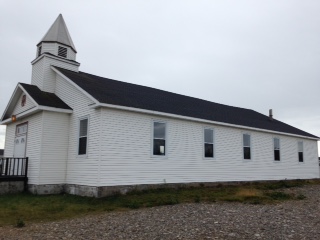 | 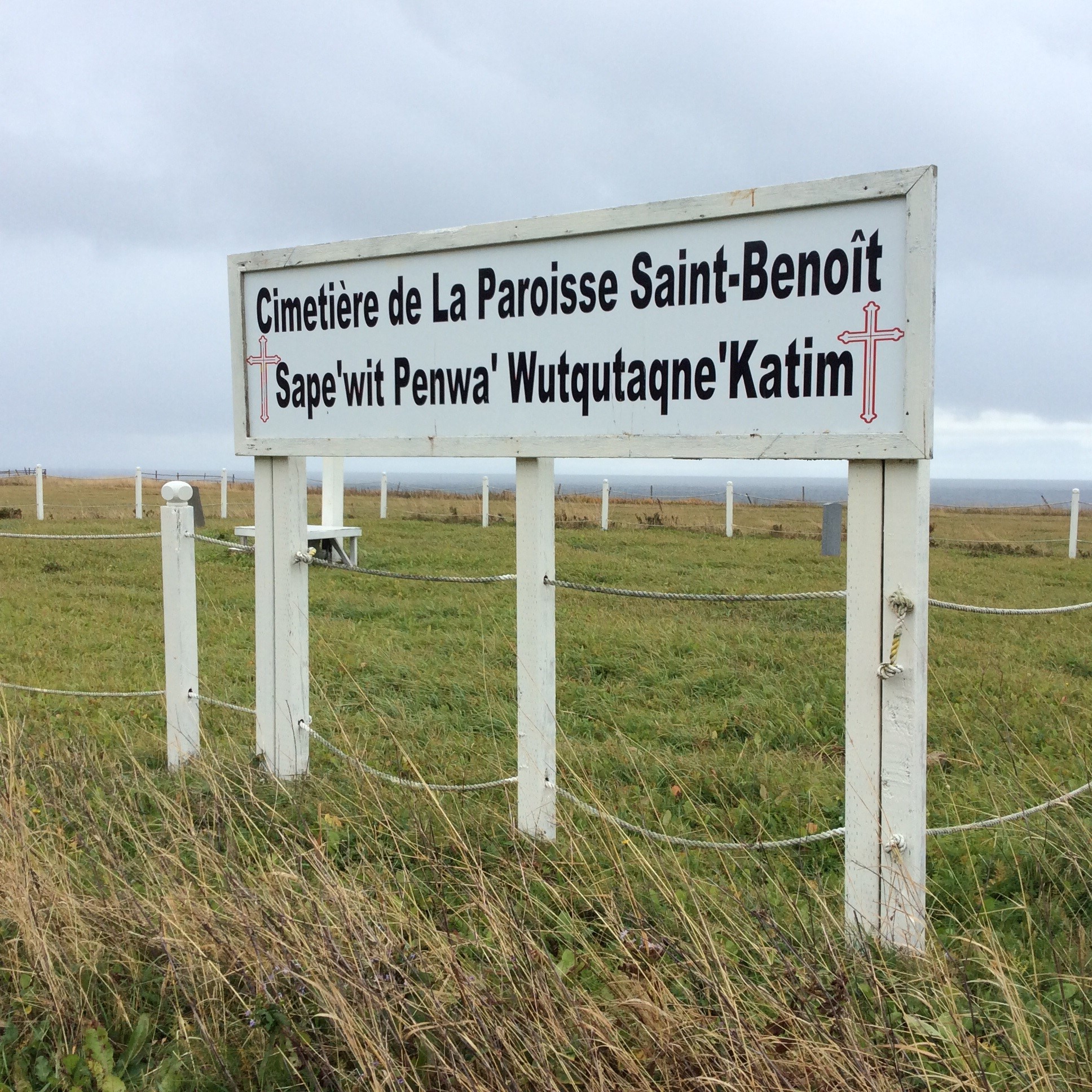 |
| St. Anne's Church in Flat Bay, and the Cape St. George's Cemetery. Photographs taken by Maura Hanrahan in 2015 | |
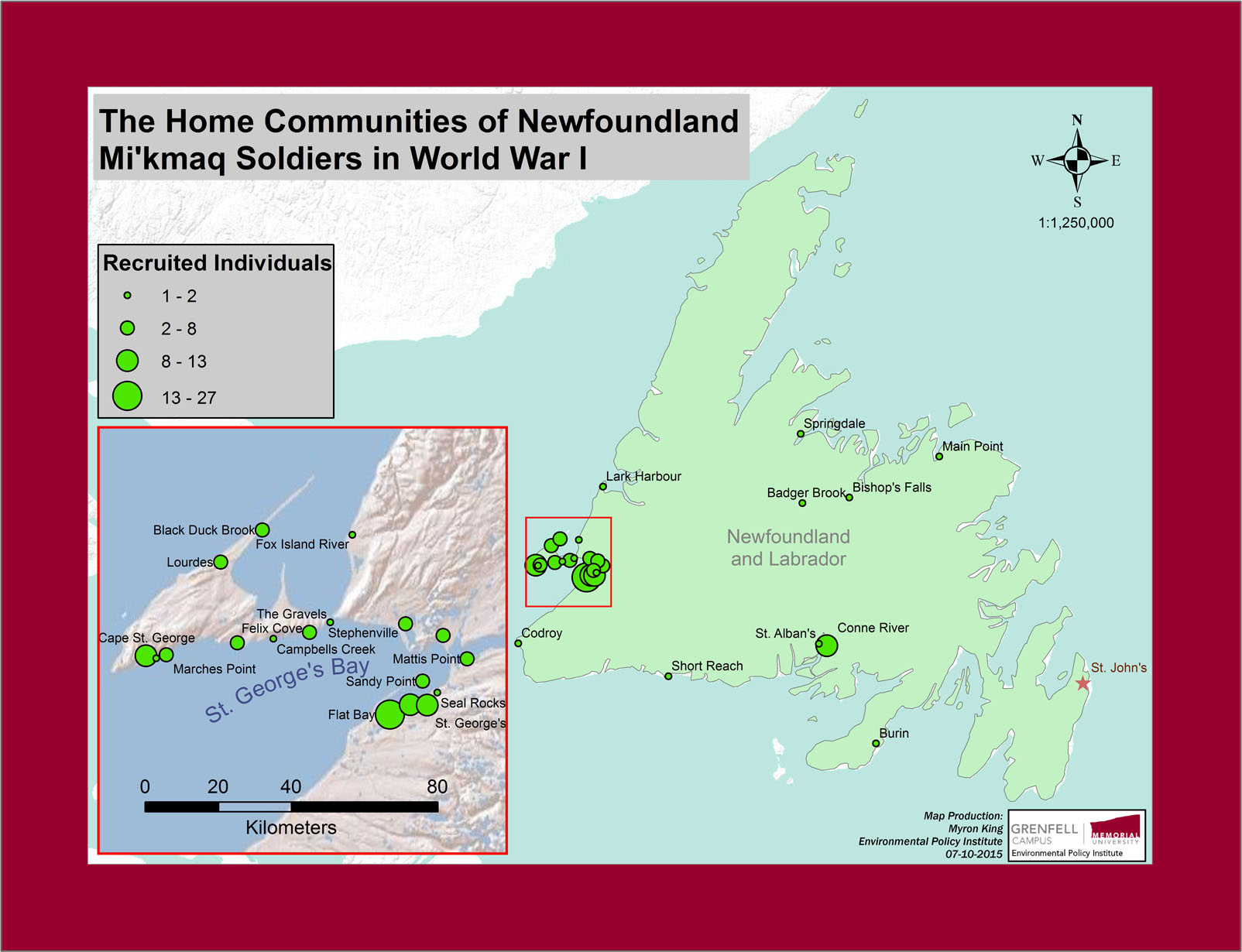
Most of the soldiers included in these two books are Mi’kmaq, as the authors mentioned to me, but this is not made explicit in the texts themselves– probably because this kind of local knowledge is well known. I was very conservative about including soldiers in this database if I was not 100% sure they were Mi’kmaq. Thus, this database may not include some soldiers who should be included but this can be changed. Note that more photographs of headstones will be uploaded to the database in the coming months, although some are already there. In addition, we are working on maps that will be uploaded.
Database visitors are invited to forward any information about errors or omissions to Dr. Maura Hanrahan, hanrahan.maura@gmail.com or maura.hanrahan@uleth.ca
The most significant limitation with official sources is the lack of personal testimony and correspondence in the service files. While service files are useful for telling us about the “who, what, when, and where” of a soldier’s life, they do not tell us much else. Service files do not tell us about what the soldier experienced while overseas, how the soldier felt about their service, or their reasons for enlistment. Fortunately, Bill O’Gorman’s and Melvin and Karen White’s books contain some of this information. Indeed, these authors have done a valuable service in collecting such stories. If more personal writings could be found from these soldiers, we could understand a great deal more about the experience of Newfoundland Mi’Kmaq soldiers during the First World War. A follow-up research project could aim to gather some of this information, perhaps through soldiers’ letters and interviews with the soldiers’ descendants.
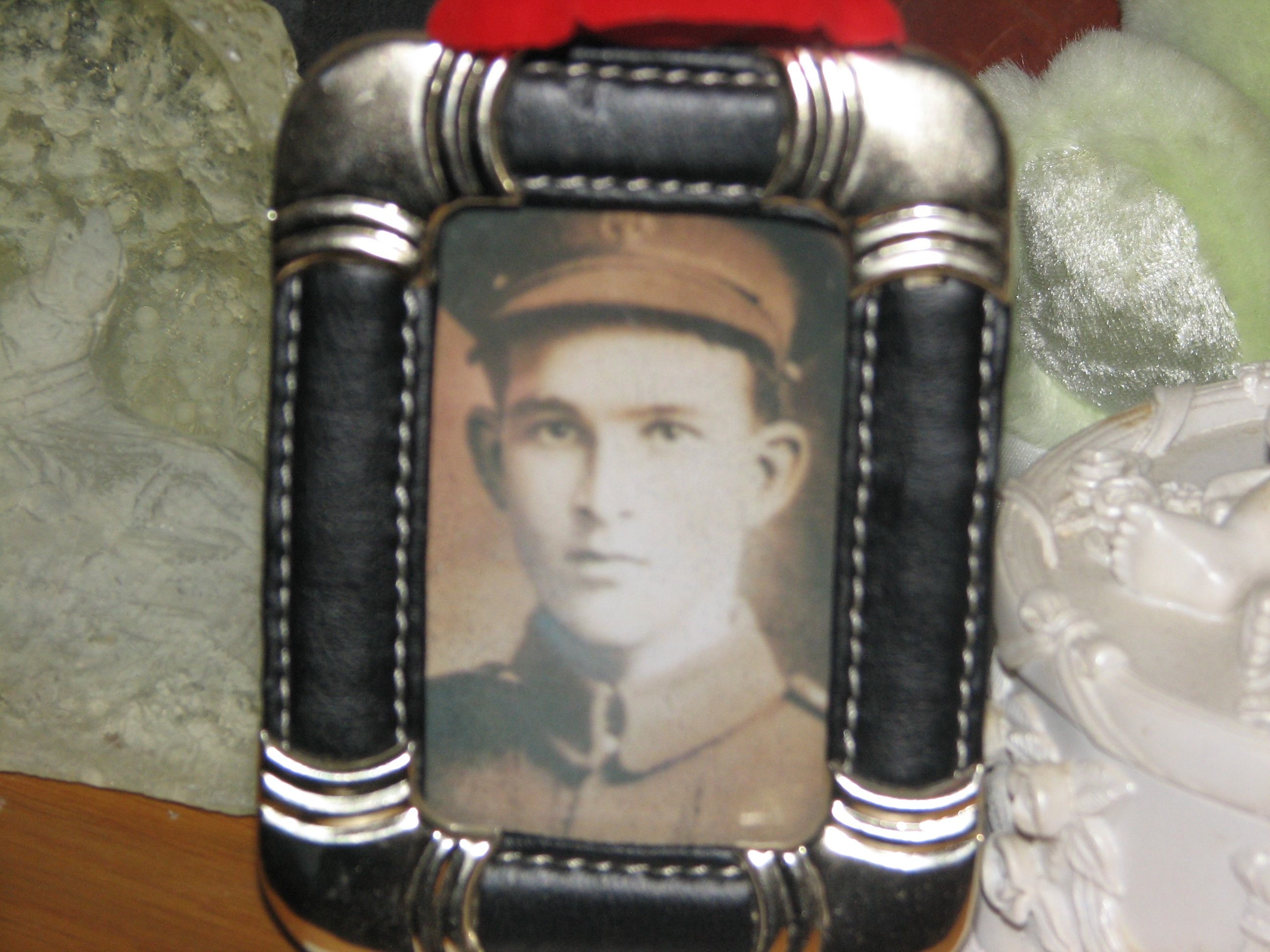 |
| Victor Muise. Photograph taken by M. Hanrahan |
Another limitation to this project has been the lack of information about those who served in the Newfoundland Royal Naval Reserve (NRNR). While we have a great deal of information contained in the Newfoundland Regiment’s service files, no such files exist for Newfoundland sailors. This is largely because ratings, as sailors were called, in the NRNR were trained in Newfoundland and then served either with the Royal Navy or Royal Canadian Navy.
It is important to note that the Newfoundland Mi’kmaq were not recognized as Indigenous people by the then-Dominion of Newfoundland. Unlike Canada, Newfoundland had no recognition legislation like the Indian Act. The absence of such legislation had advantages as well as disadvantages but in this case it meant that the soldiers listed here were not seen as Mi’kmaq or Indigenous soldiers, which they were. This database aims to correct that oversight.
Everyone in the database is male as I was unable to locate any Mi’kmaq women who enlisted. This was a gendered time but there is some research on Indigenous women’s involvement in the war; for instance, many Six Nations of the Grand River, Ontario women knitted for the soldiers. Newfoundland Mi’kmaq women may have taken part in similar activities. While the majority of the Mi’kmaq soldiers came from the West Coast, there were others from Bay d’Espoir, Bishops Falls and Burin. This shows how widespread the Mi’kmaq population was in Newfoundland.
World War I was billed as “the war to end all wars.” Sadly, as events in the 1930s demonstrated, this was not the case. World War I turned out to be a senseless war, which made getting to know these young Mi’kmaq soldiers even more touching. This was especially true of those who were injured or killed. To give two examples: Austin Benoit, 24, of Flat Bay was wounded by mustard gas; Fred Colombe, 21, of Shallop Cove, near St. George’s died at Gallipoli.
While this database presents basic information, I hope to use it and other research to write more about the Newfoundland Mi’kmaq in World War I. I have a chapter forthcoming in the book New Perspectices on Performance, Literature, and Identity: Ethnic Resonances, edited by Yiorgos Kalogeras and Cathy C. Waegner, Routledge. The chapter is called "An Indigenous Attempt at Re-Imagining: The Participation of the Newfoundland Mi'kmaq in Europe's Great War."
Finally I would like to thank: Michael Westcott, PhD student in History, for his valuable assistance with the project; Larry Dohey, Manager of Collections and Projects, The Rooms Provincial Archives Division; Myron King, Environmental Policy Institute, Grenfell Campus for his maps; Jeff Keeping, MarComm, Grenfell Campus for preparing and posting the database; Pamela Gill and Melanie Callahan, MarComm, Grenfell Campus for helping distribute information about the project; and the World War 100 Commemorations Committee, Memorial University which funded the project. All photographs were taken by Maura Hanrahan in 2014 and 2015.
Wela’lin,
Maura Hanrahan, Ph.D.
Board of Governors Research Chair in Indigenous
Studies
University of Lethbridge, Alberta
Adjunct professor, School of Social Sciences
& the Environment, Grenfell Campus
Memorial University of Newfoundland
email: hanrahan.maura@gmail.com or maura.hanrahan@uleth.ca
1http://www.cwgc.org
2http://www.rnfldr.ca/history.aspx?item=33
3http://www.wrecksite.eu
4O’Gorman, Bill (2009) Lest We Forget: The Life and Times of
Veterans from the Port au Port Peninsula. West Bay Centre, NL
5White, Melvin and Karen (2014) We Remember You Now: Honoring the
Soldiers of WW1 of Bay St. George South.
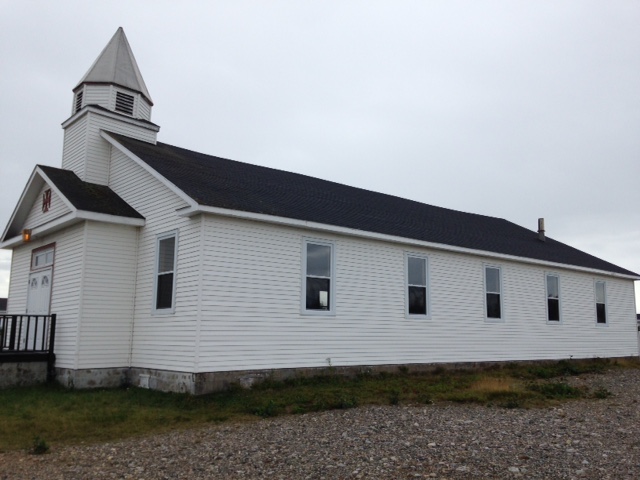
Images from M. Hanrahan